Master’s Thesis: Nova AI
Research + UI/UX │Graduate work│Spring 2024
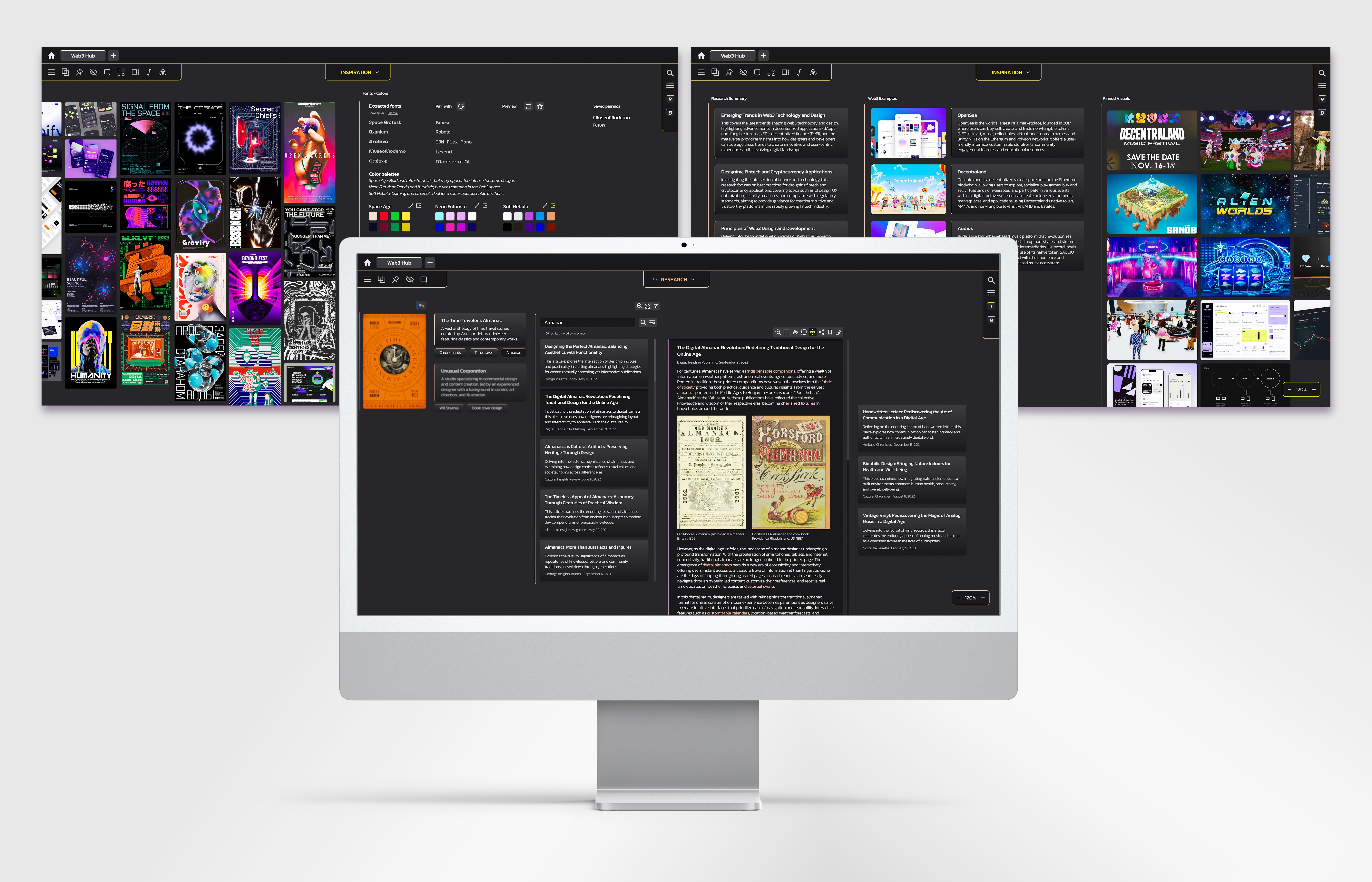
Nova AI is a platform that unifies preparatory tasks of the creative process into one customizable workspace.
At a Glance
- A year long exploration
- AI as a co-creator
- Retaining human and creative agency
- Minimizing tedious tasks and tool fragmentation
- Helps with research, ideation, and breaking creative block
- Doesn’t replace creative production software
Presented at
- SECAC 2025, panel “AI’s Dual Role in Industry Innovation and Design Education” lead by Yvette Shen and Kevin Ward (The Ohio State University)
- North Carolina State University, April 2024
Challenge
Existing software does not have the flexibility to support the rapidly evolving creative process. The preparatory process in which we research, ideate, and develop concepts suffers from extreme tool fragmentation, leading to information loss and cognitive overload.Solution
An adaptable platform that centralizes the necessary tools and uses an AI co-creator to accommodate the fluid nature of the creative process. With customizable workspaces, Nova AI can conform to various needs and streamline the creative workflow.Problem Statement
Inspired by existing struggles designers face in their creative process and many unsophisticated AI integrations in existing creative software, I decided to investigate why design tools aren’t considering needs of their primary user base - designers.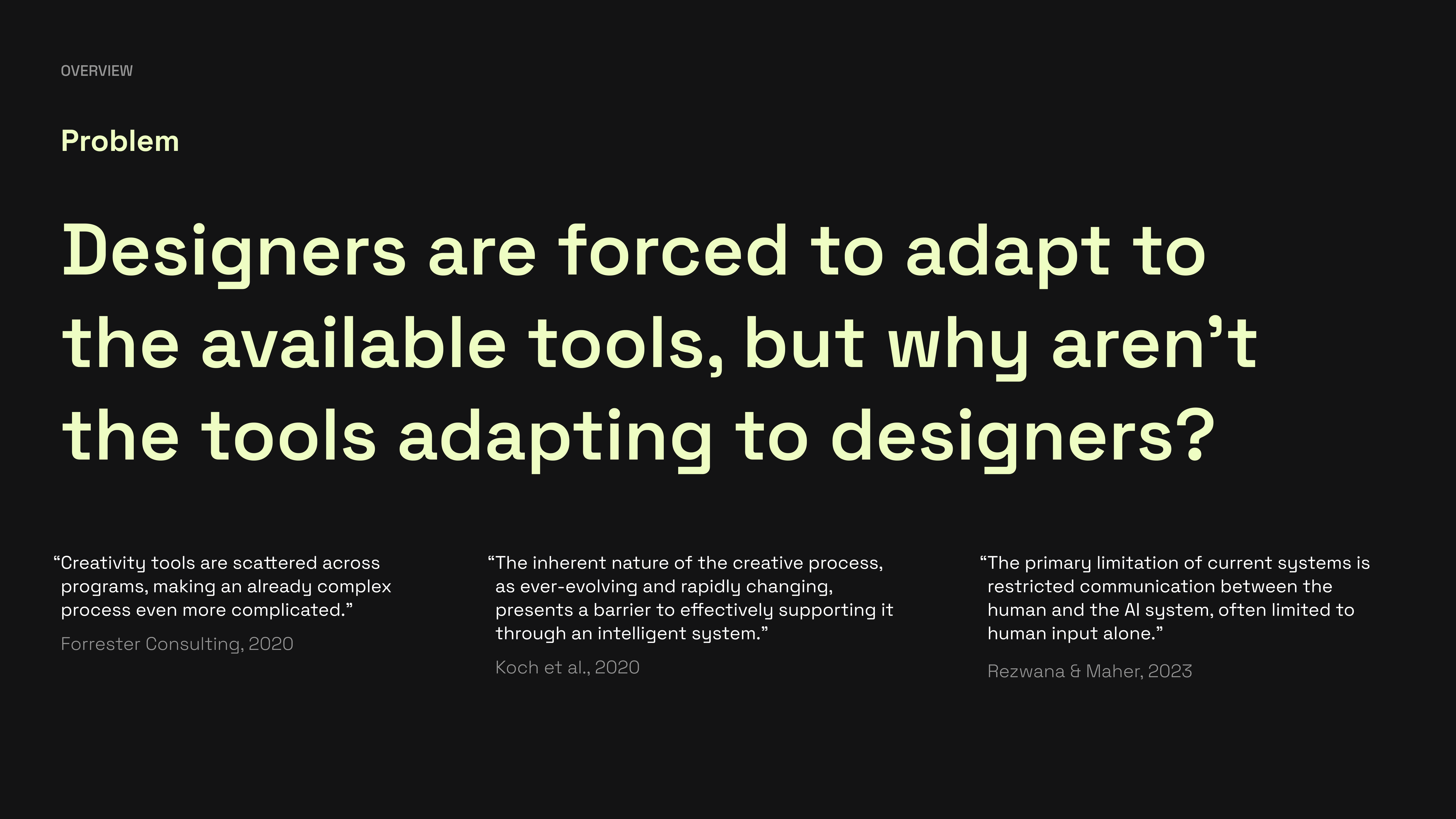
Research
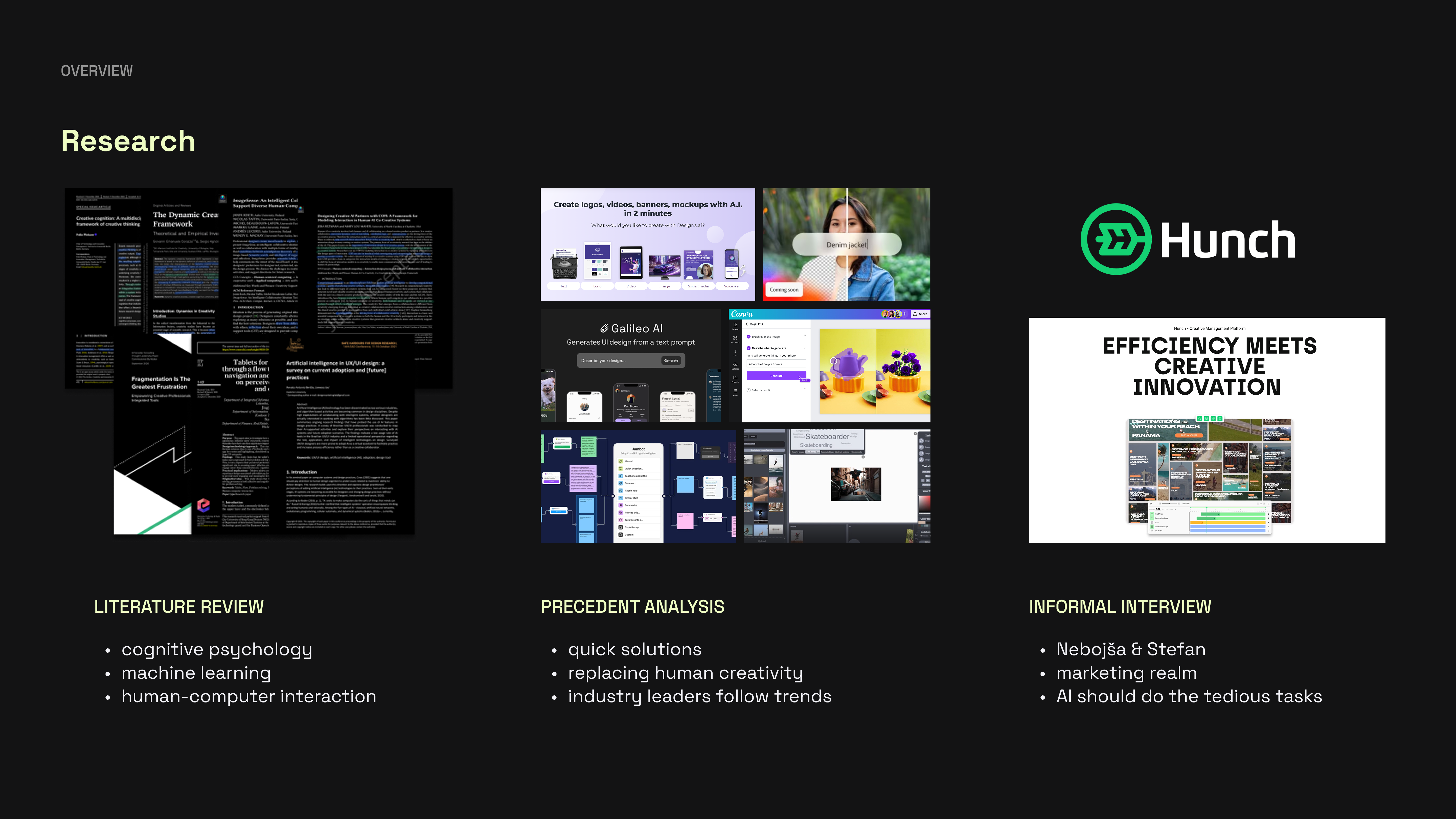
I reviewed literature in cognitive psychology, machine learning, and human-computer interaction, with the goal of creating a good knowledge base in related fields. Precedent analysis revealed that most AI implementations among industry leaders follow trends and are replacing human creativity, instead of supporting it. These notions were supported by interviews with product designers at Hunch, concluding that AI should do the tedious tasks and leave creating to creatives.Research Question & Studies
In order to further break down my main research question, I decided to focus on three distinct parts of the creative process: familiarization and research, ideation and concept development, and creative block.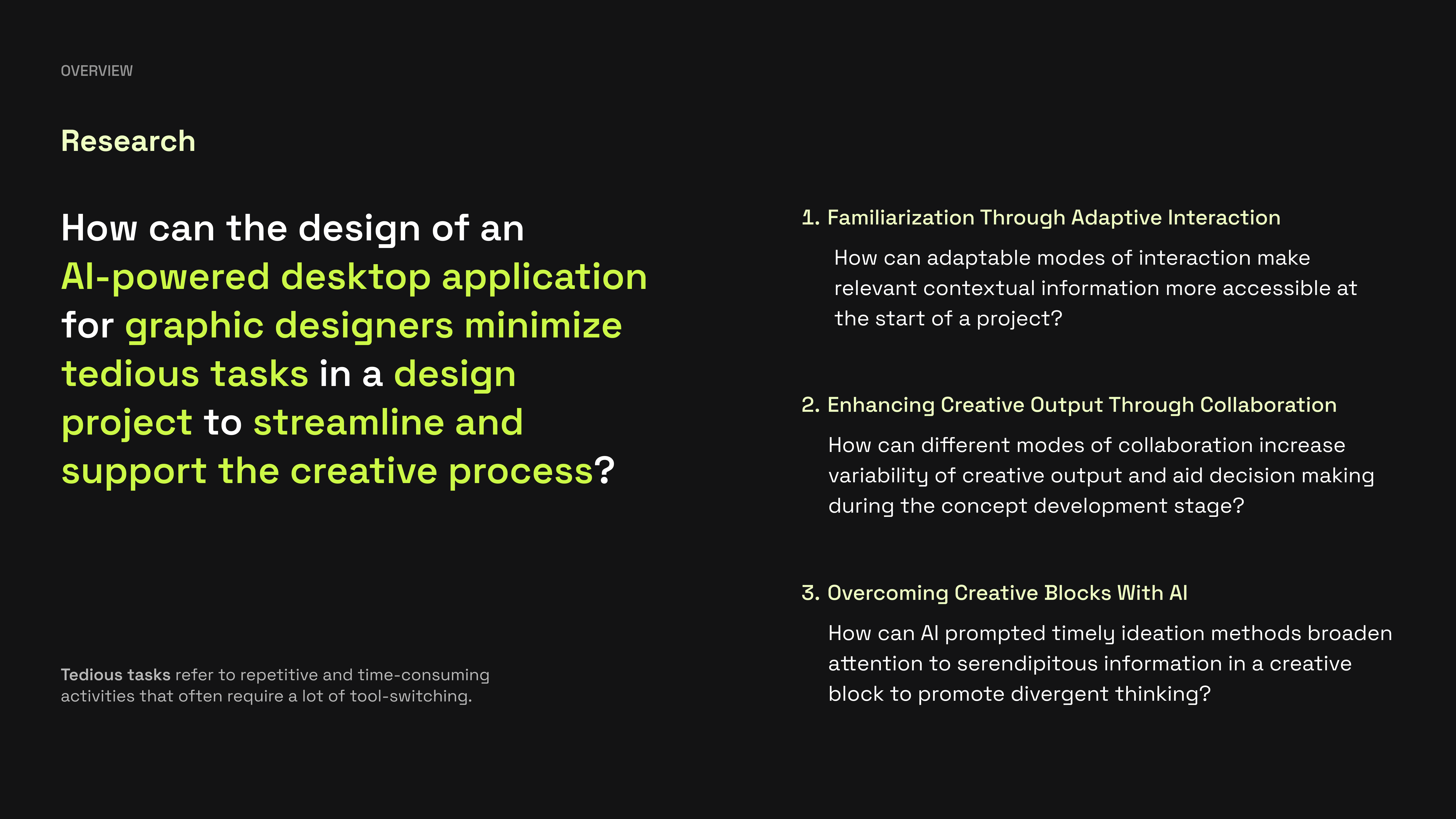
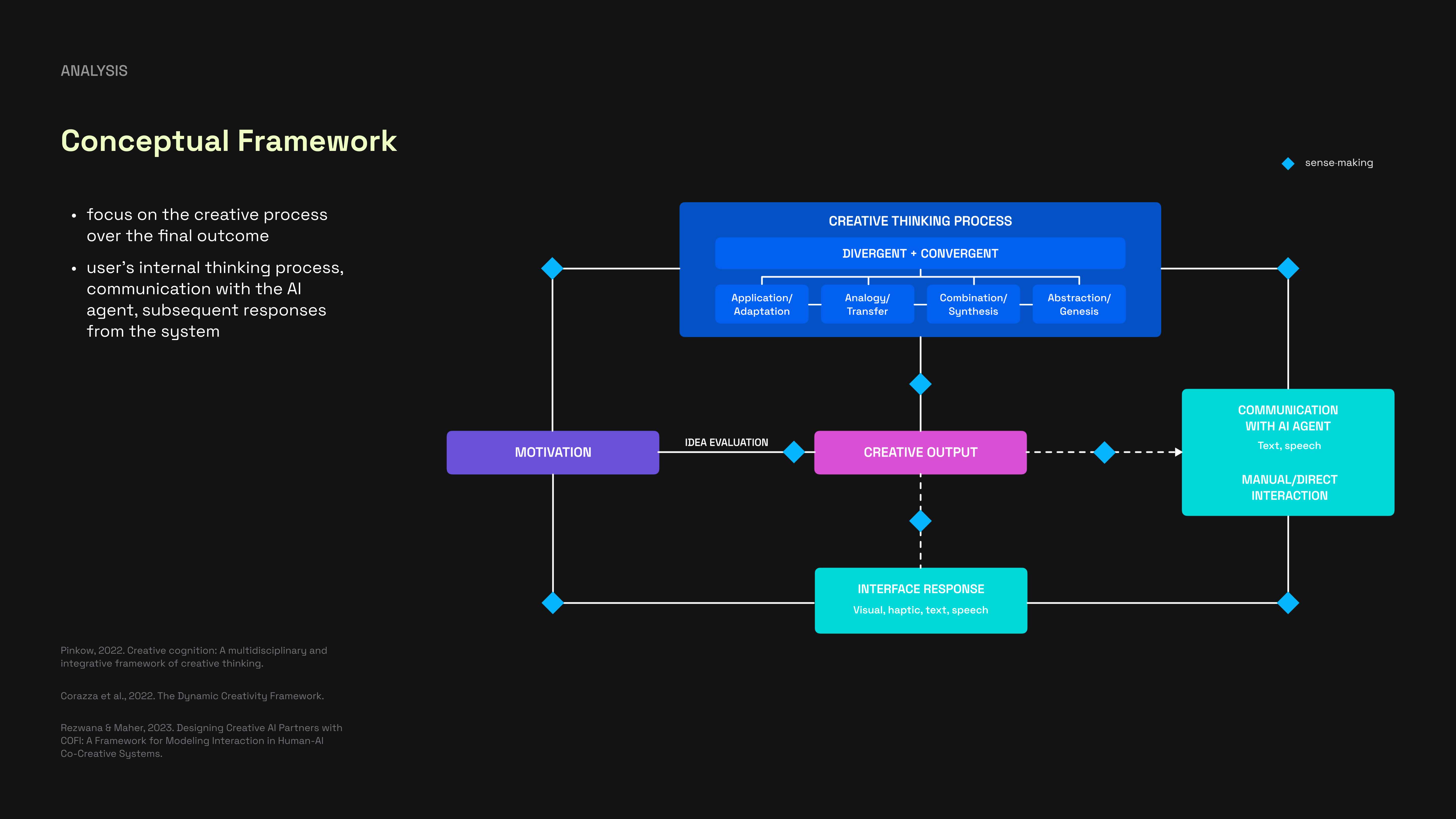
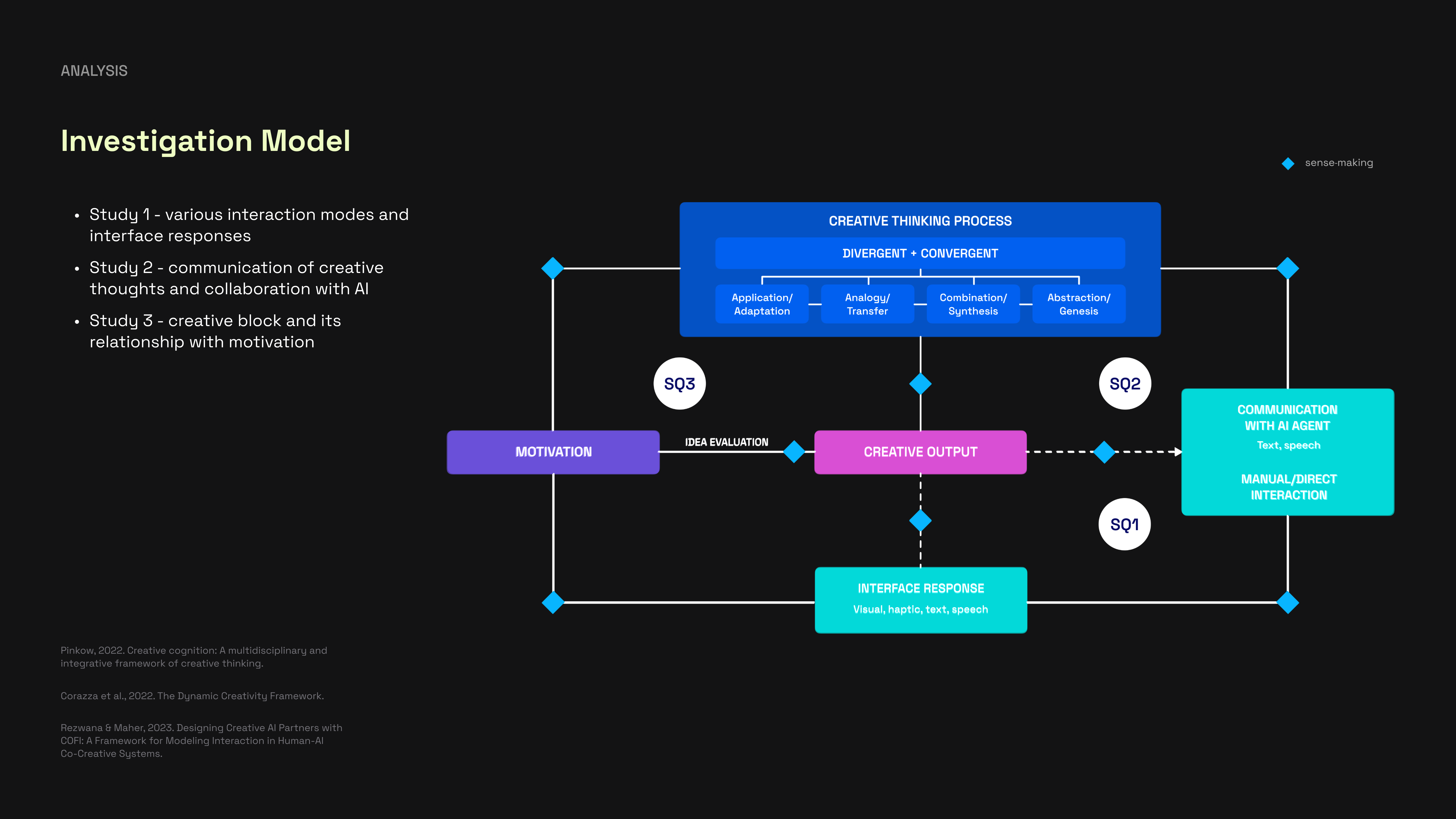
Conceptual Framework & Investigation Model
The conceptual framework combines concepts sourced from the literature review to ensure the studies are grounded in research. Most importantly, the framework is cyclical and focuses on the creative process instead of the outcome.
Solution & the Problem Space
Nova AI focuses on processes that happen in the preparatory stage - such as research, ideation, and concept development. It integrates the corresponding tools into a unified and customizable workspace to support the creative process.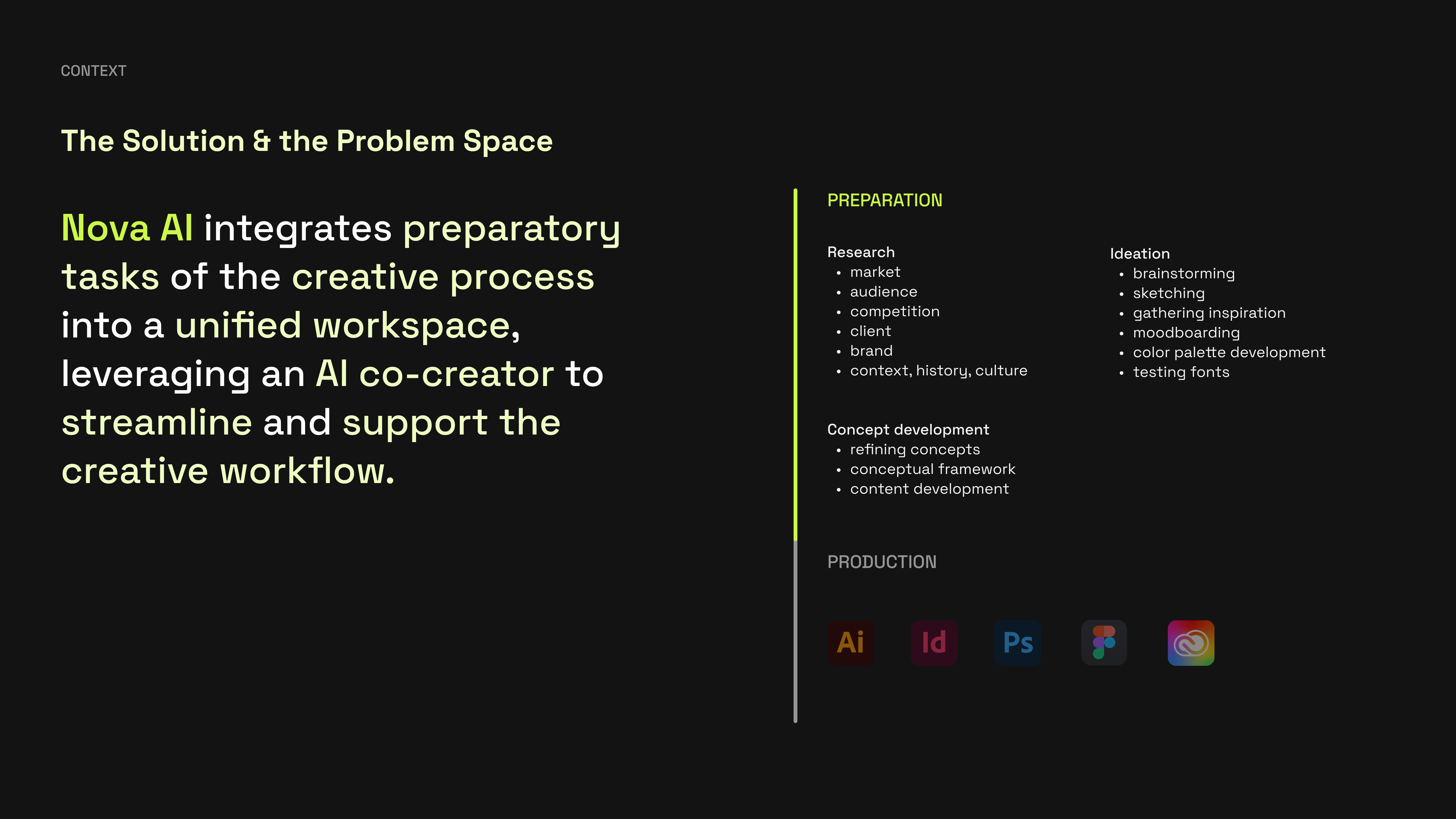
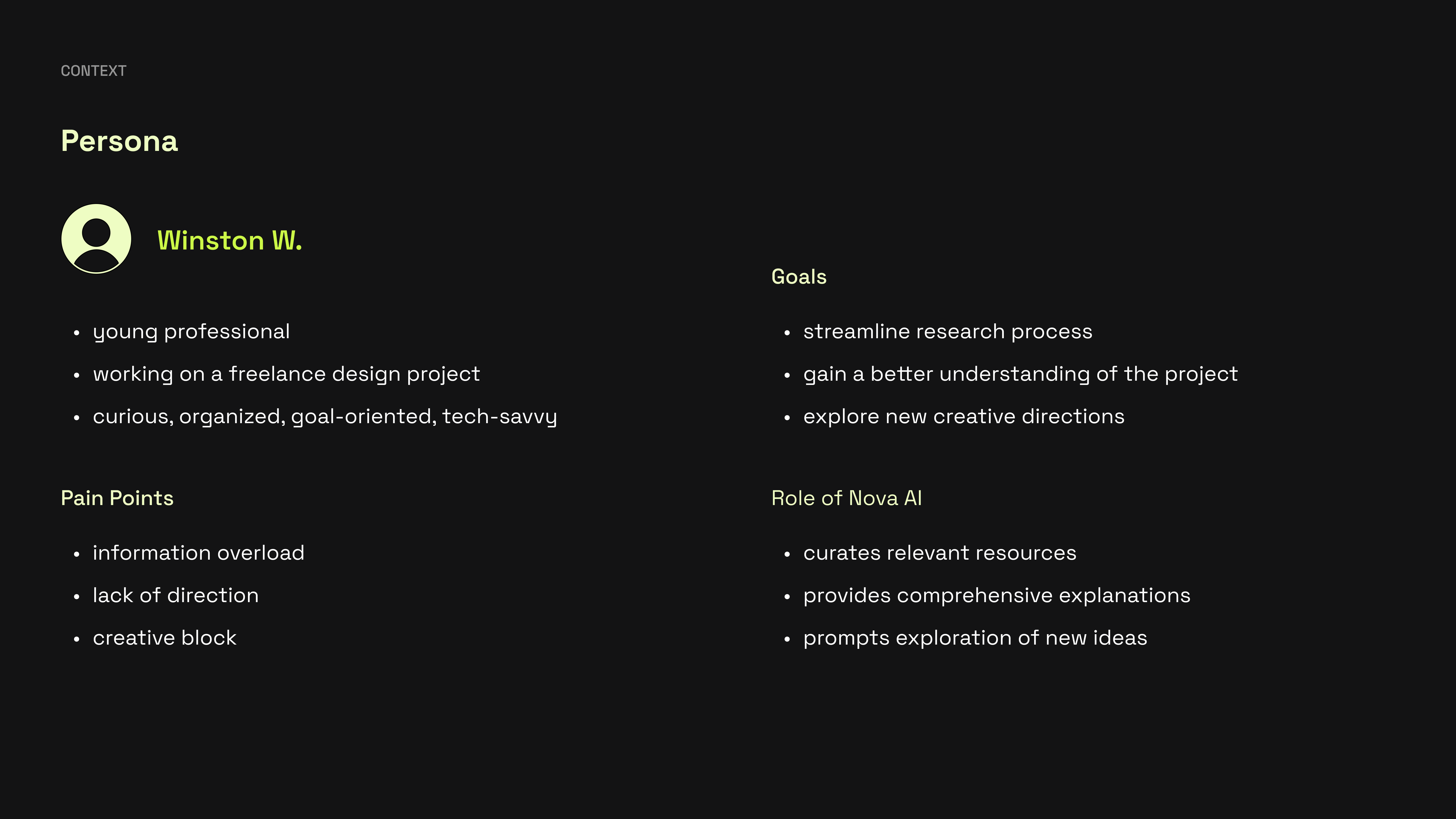
Persona
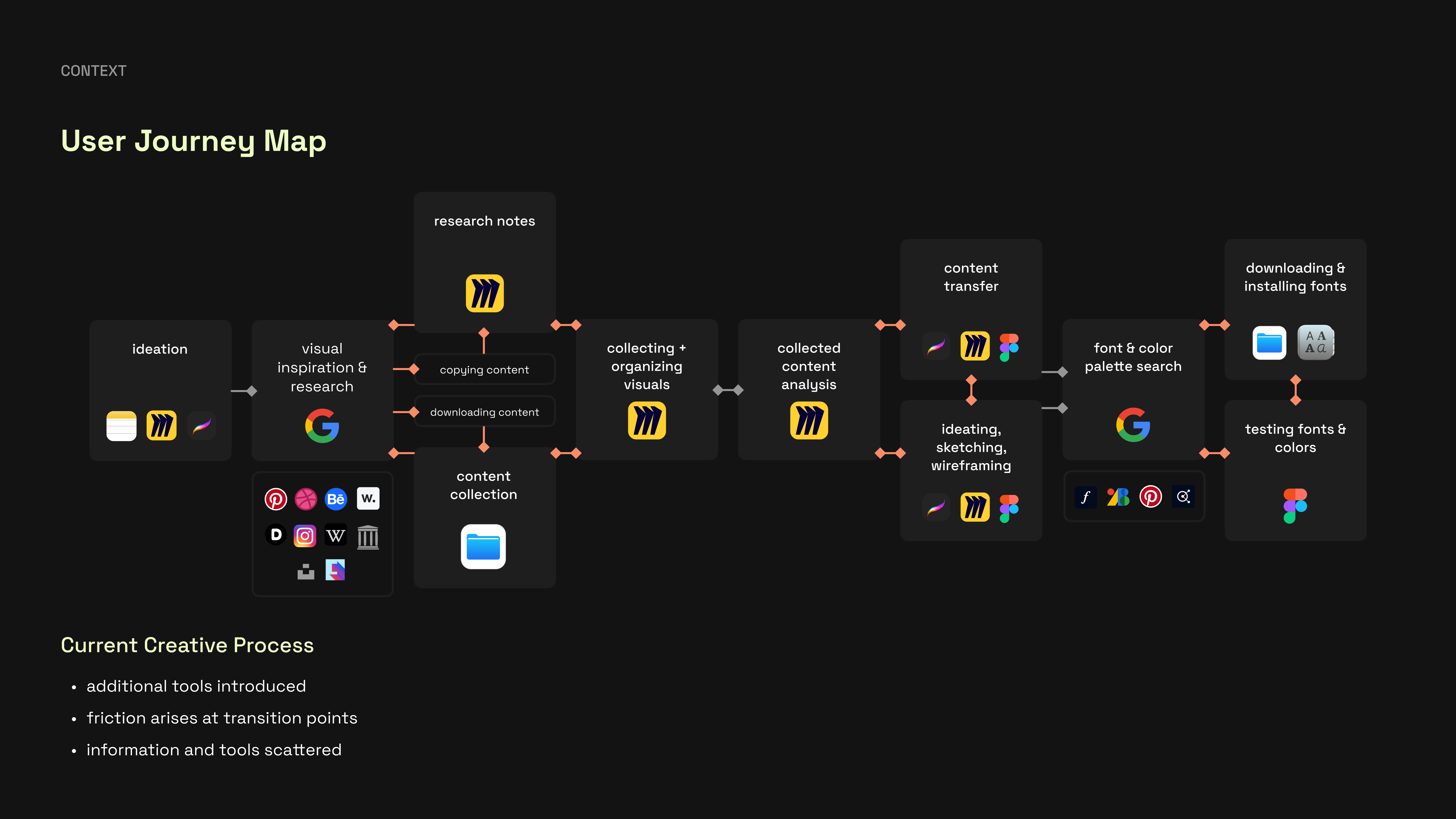
Winston W. is a persona created to illustrate the capabilities of Nova AI in a comprehensive way - by following his creative workflow.User Journey Map
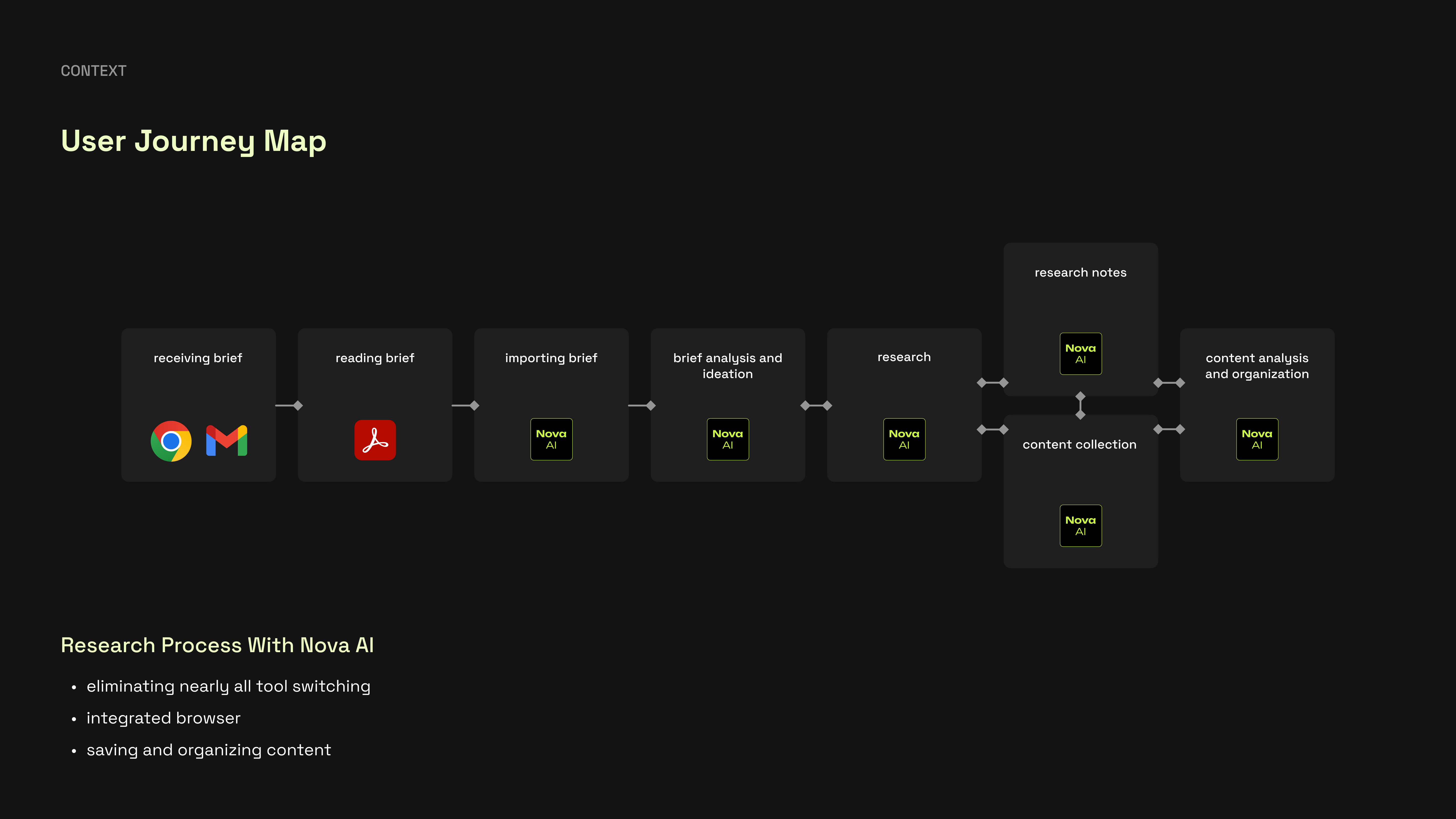
The research process suffers from lots of tool fragmentation due to software limitations. Nova AI eliminates nearly all tool switching due to its integrated browser and ability to save and organize content.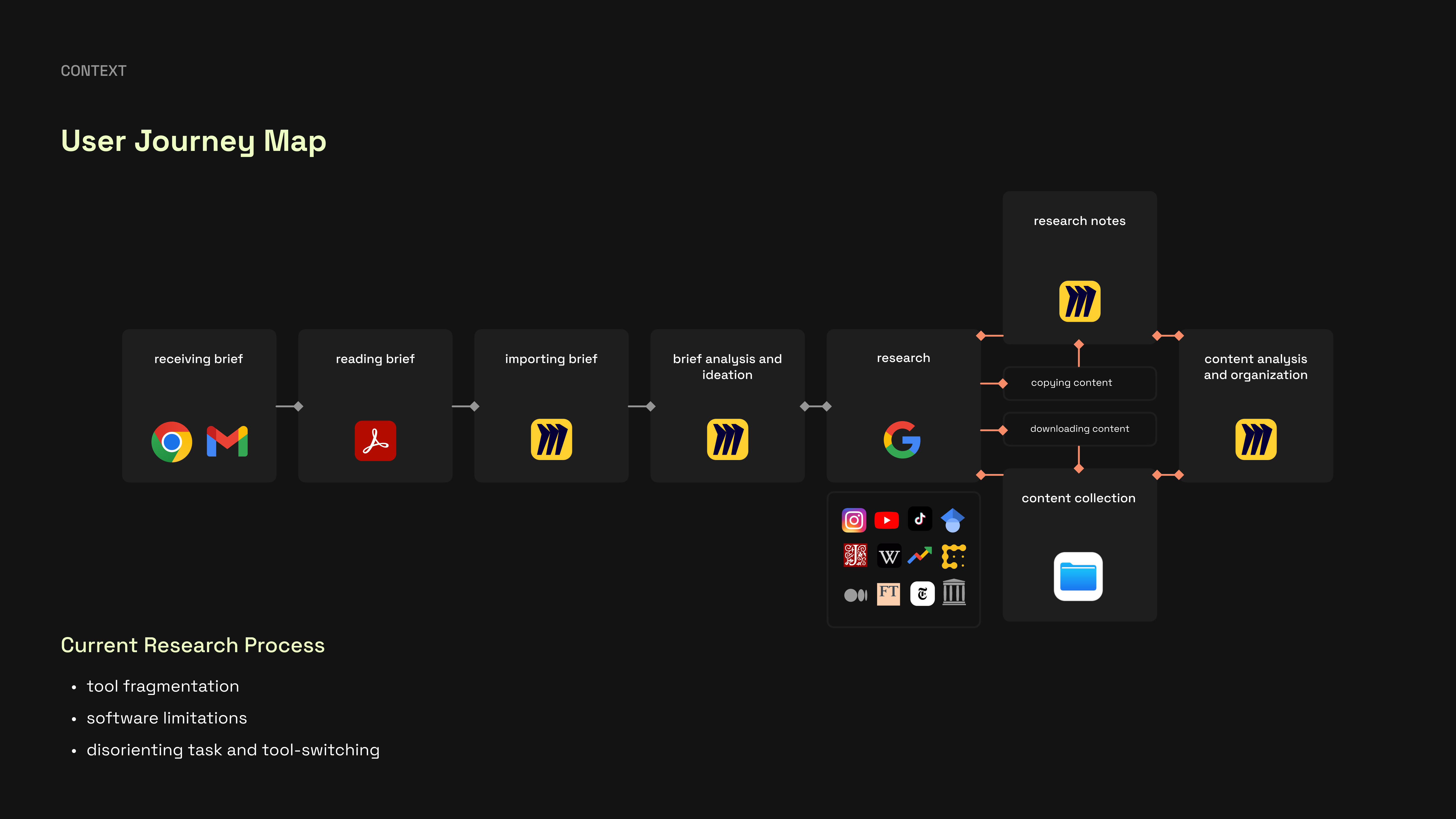
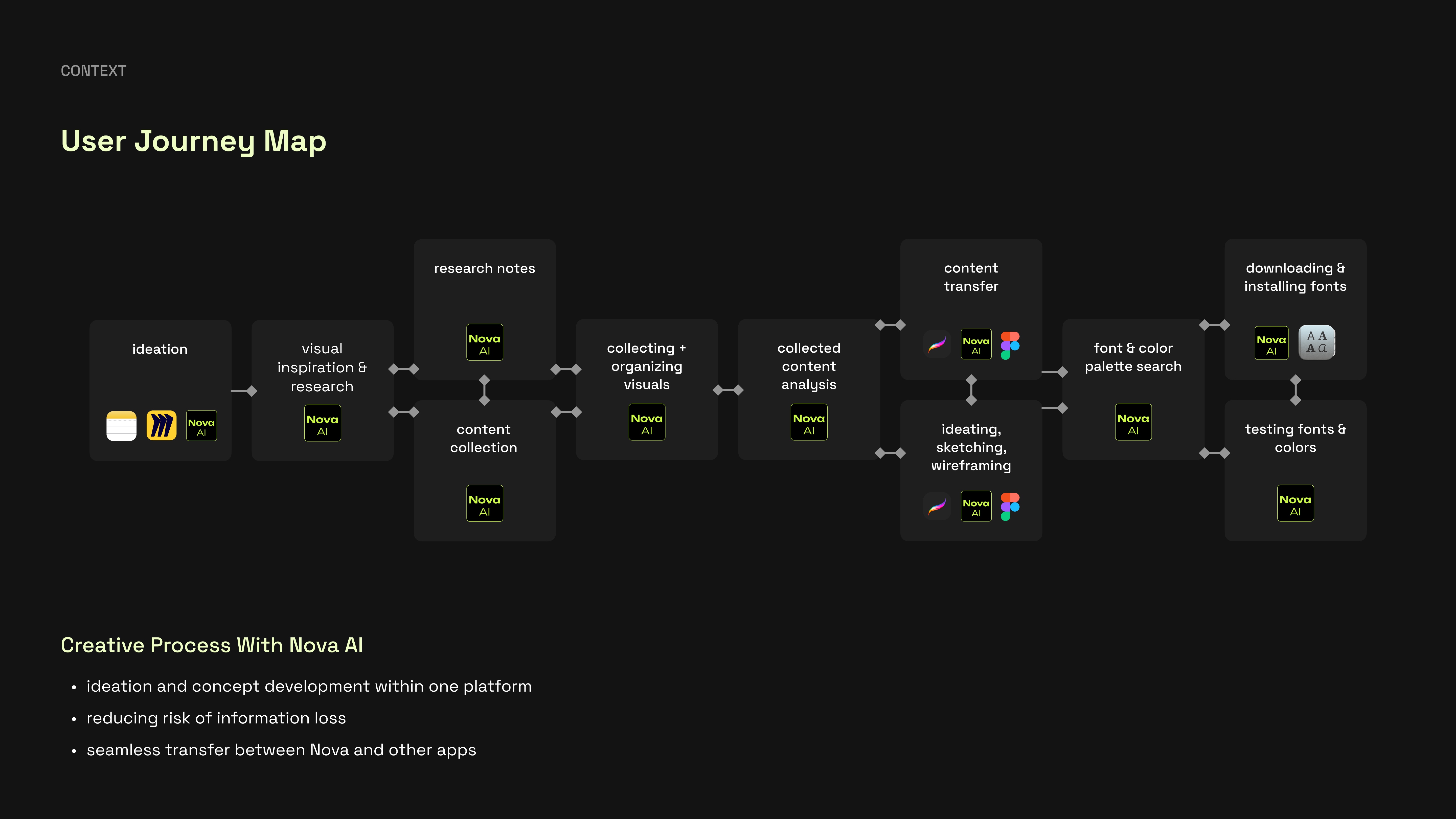
The creative process introduces more tools which increases the friction and risk of information loss at transition points. Nova AI contains ideation and concept development in one platform, enabling seamless information transfer internally and externally.
Visual Language
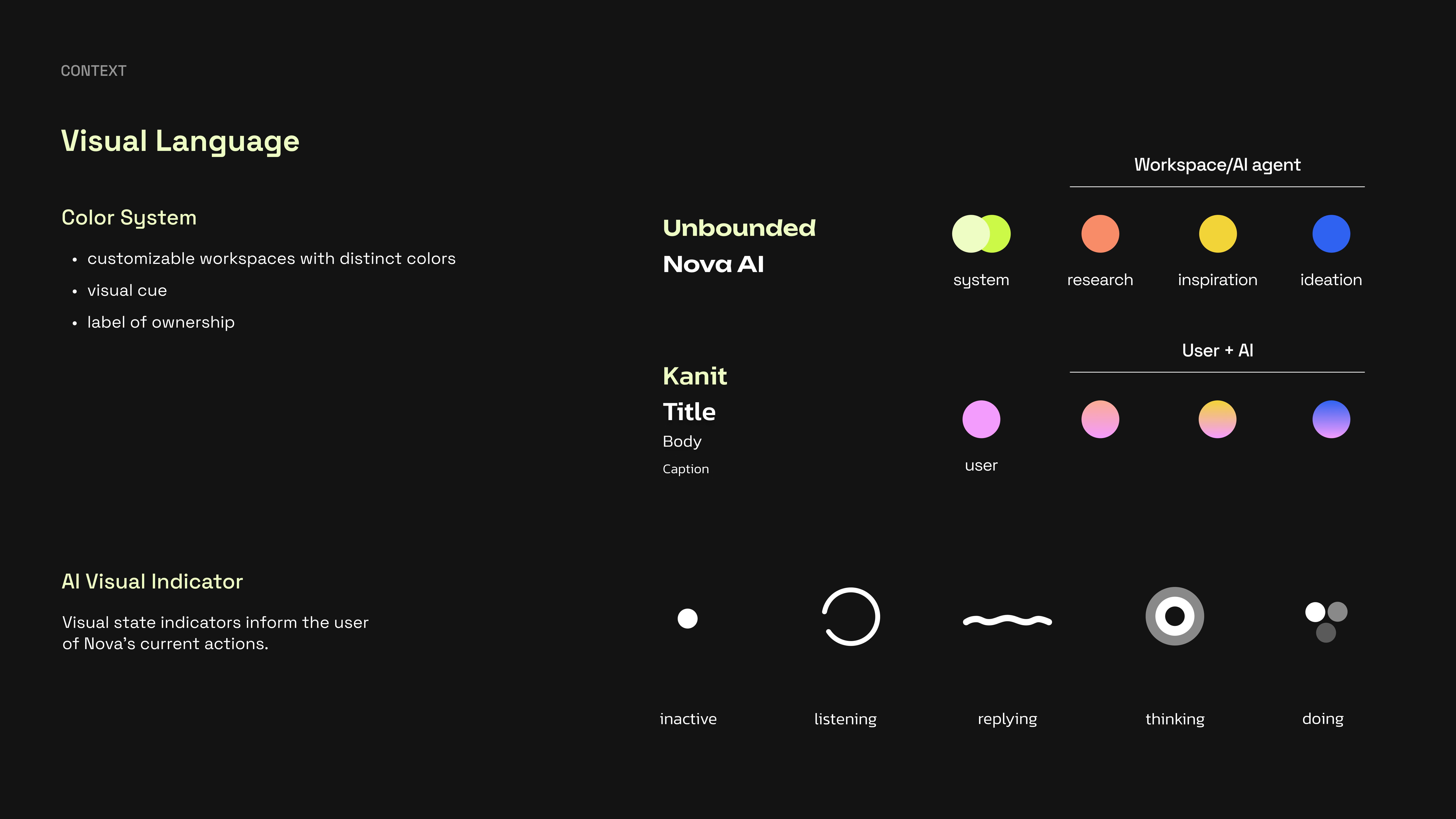
Nova’s workspaces come with customizable colors serving as a distinguishing element between workspaces, as well as a label of ownership in places where the user and AI collaborate.Visual indicators communicate Nova’s current action with the user.
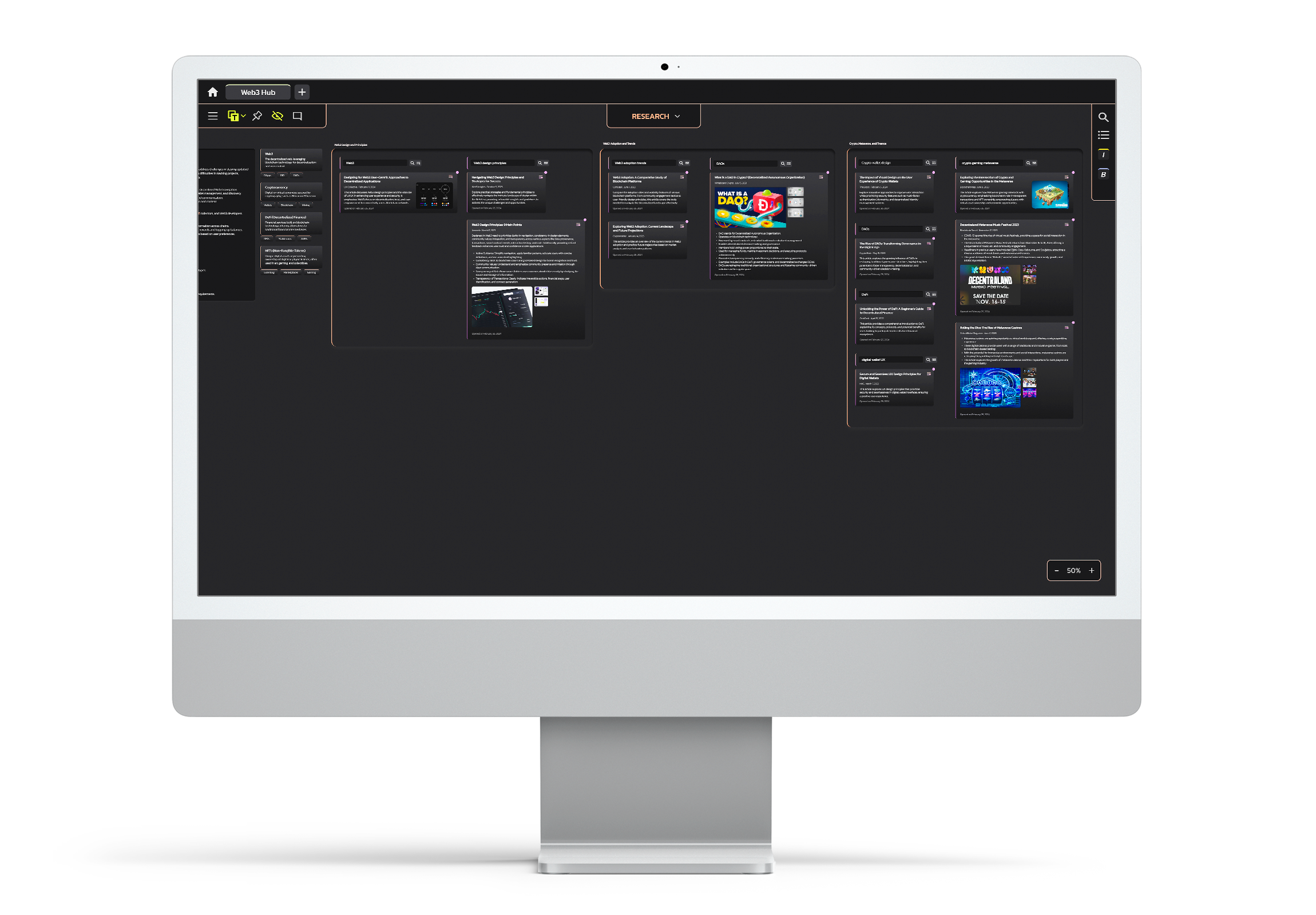
Study 1: Familiarization
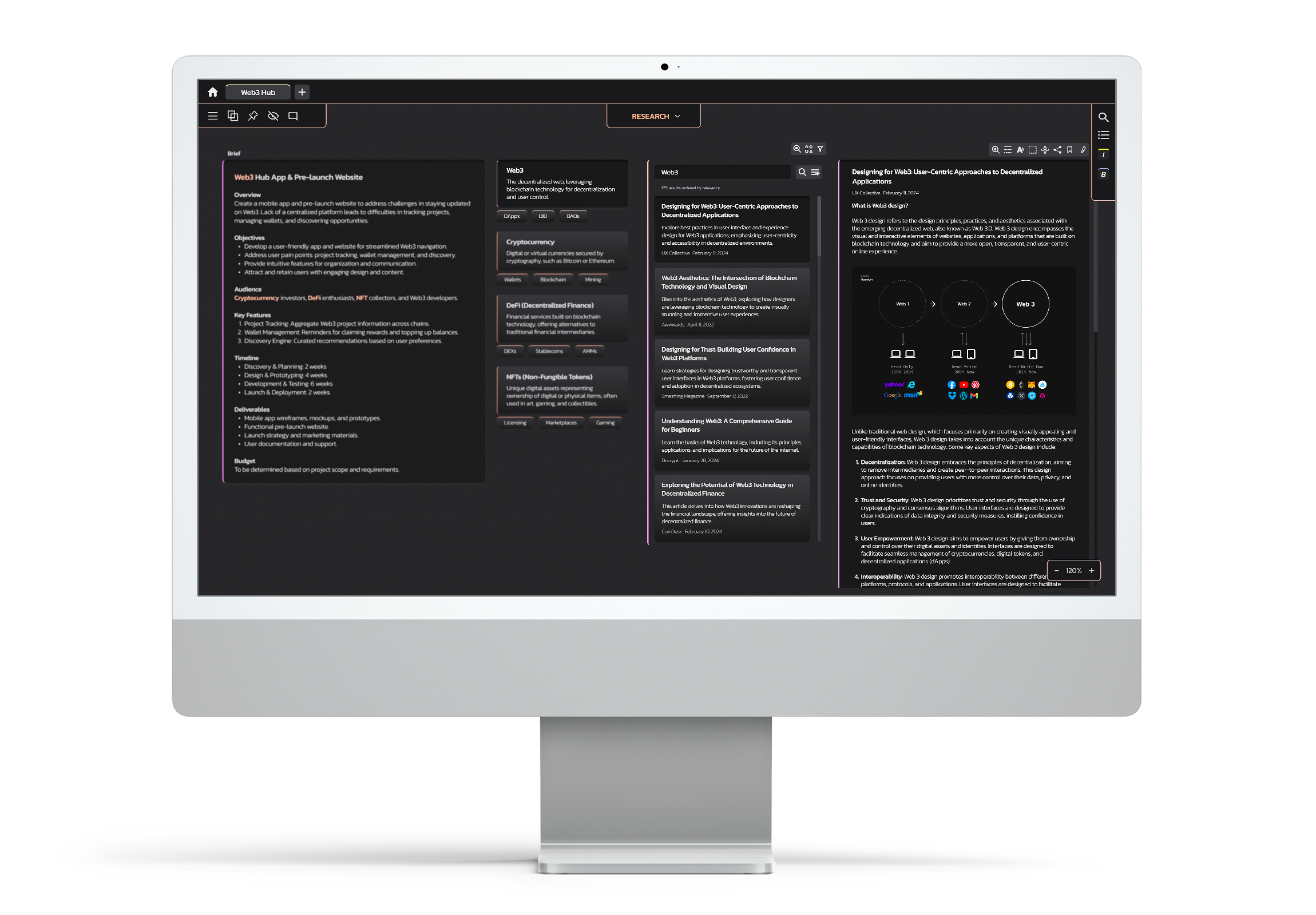
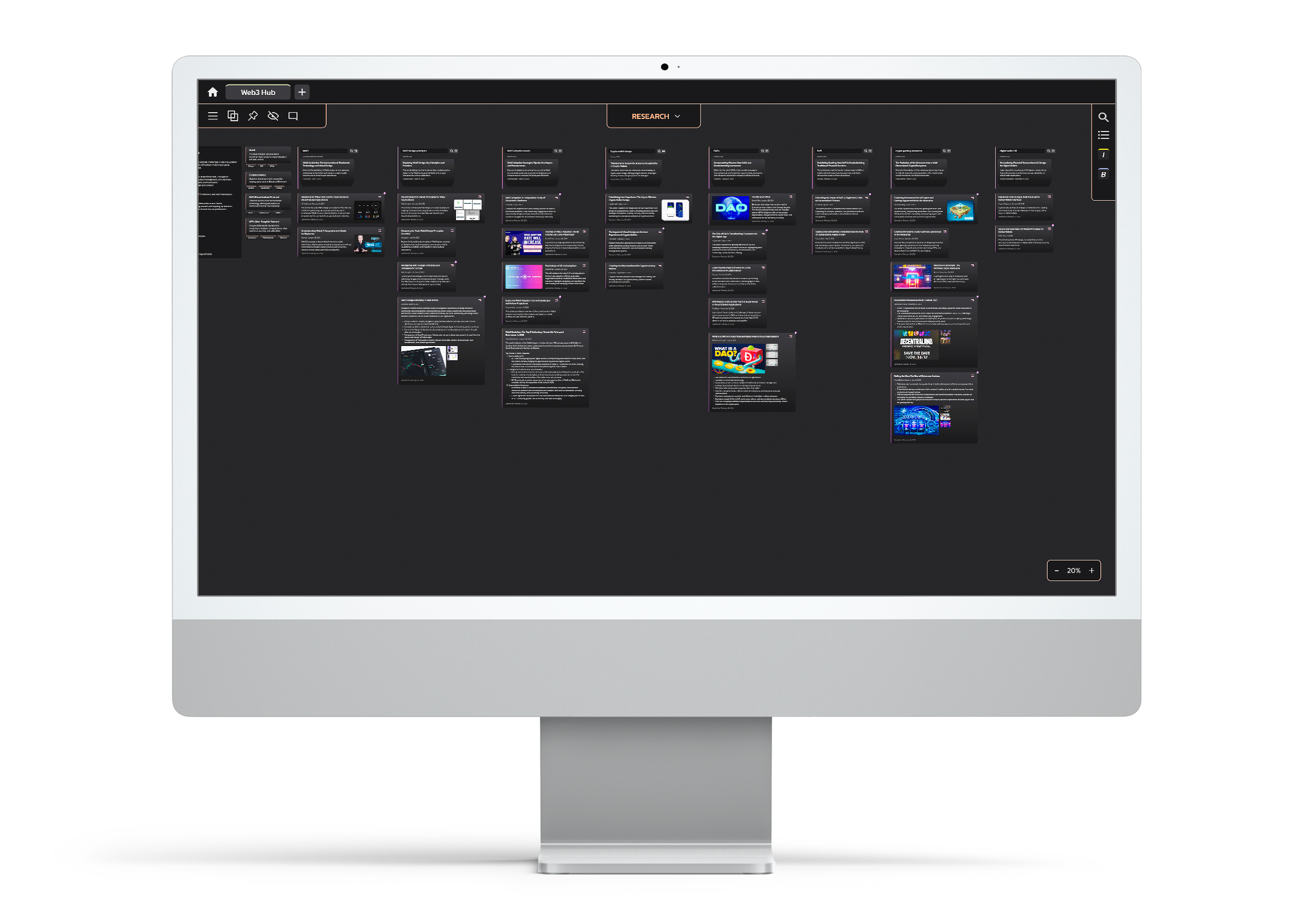
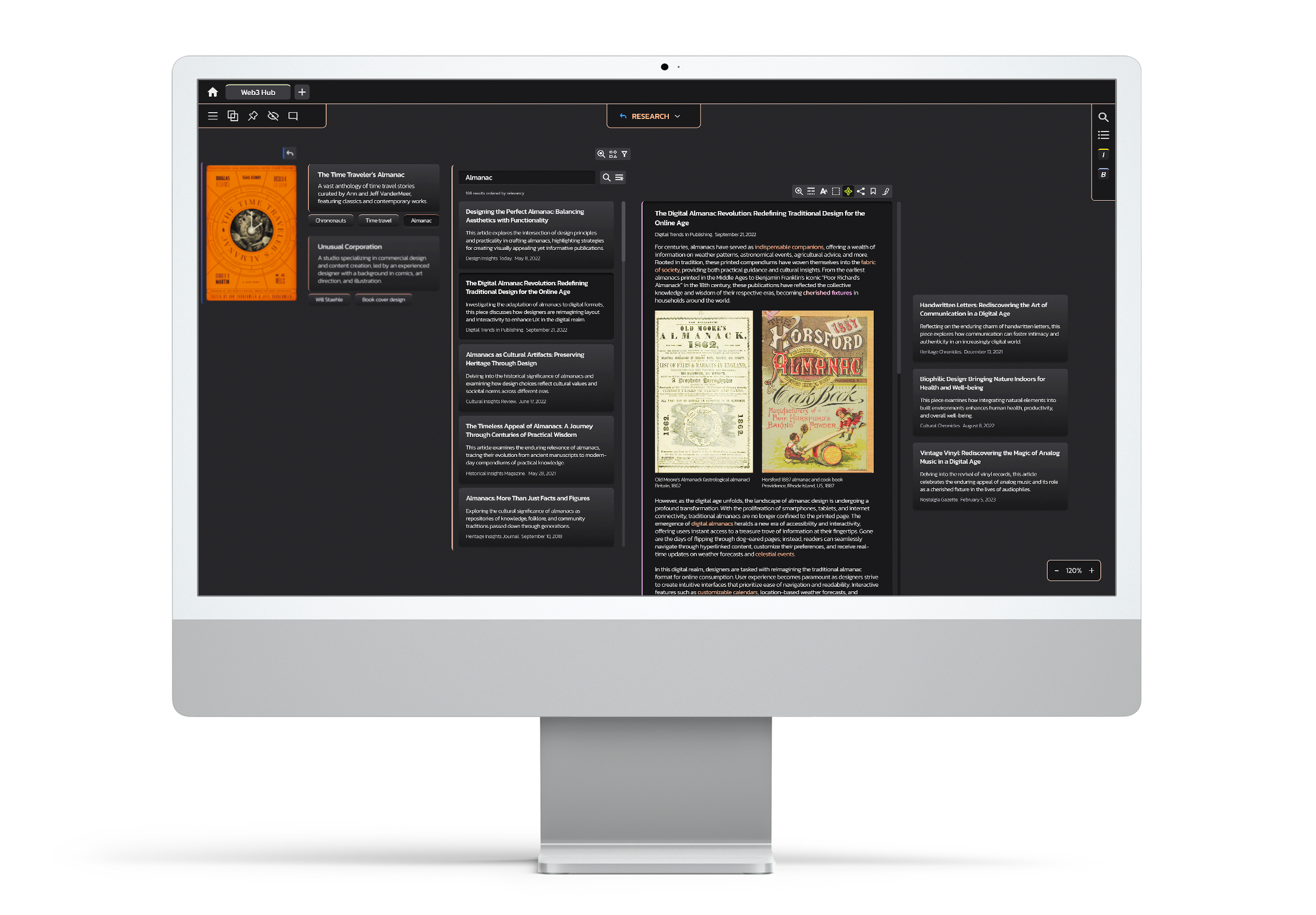
Study 1 focuses on the start of the research process and making relevant information more accessible through adaptable modes of interaction.Key features:
- Intelligent brief analysis
- Browsing result summaries
- Filtered search results
- Assistive in-text summaries
- Automatic result grouping
Study 2: Concept Development
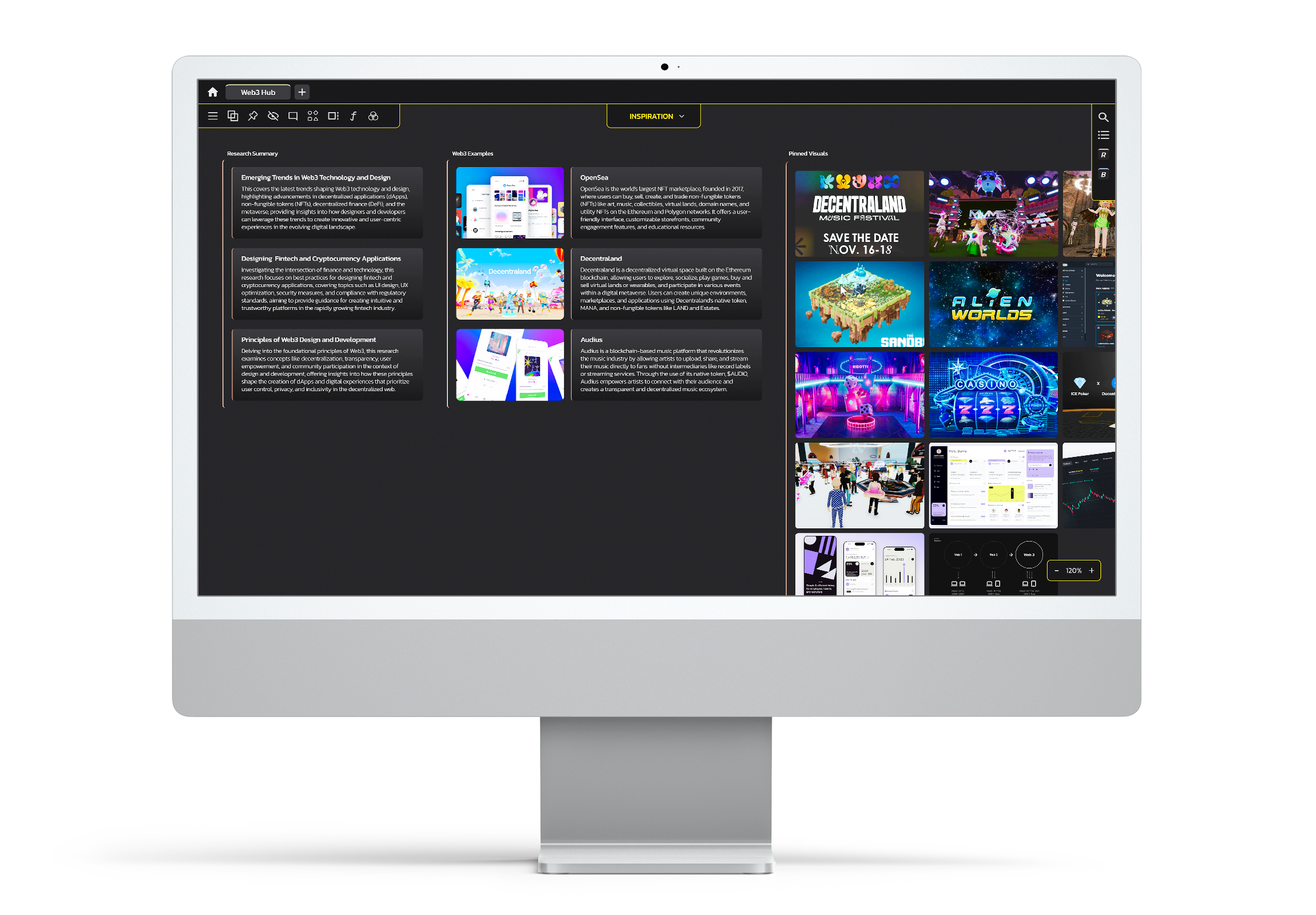
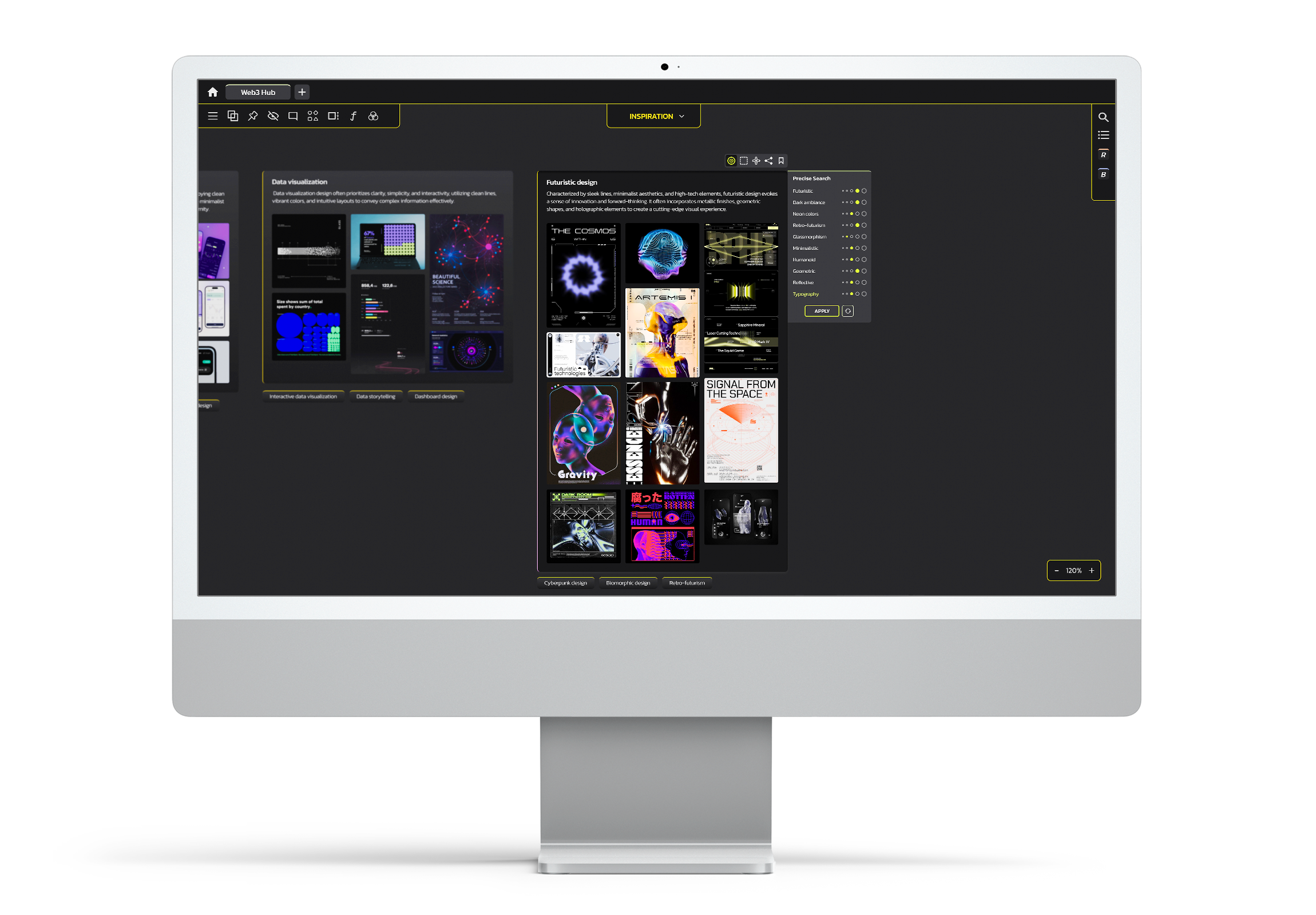
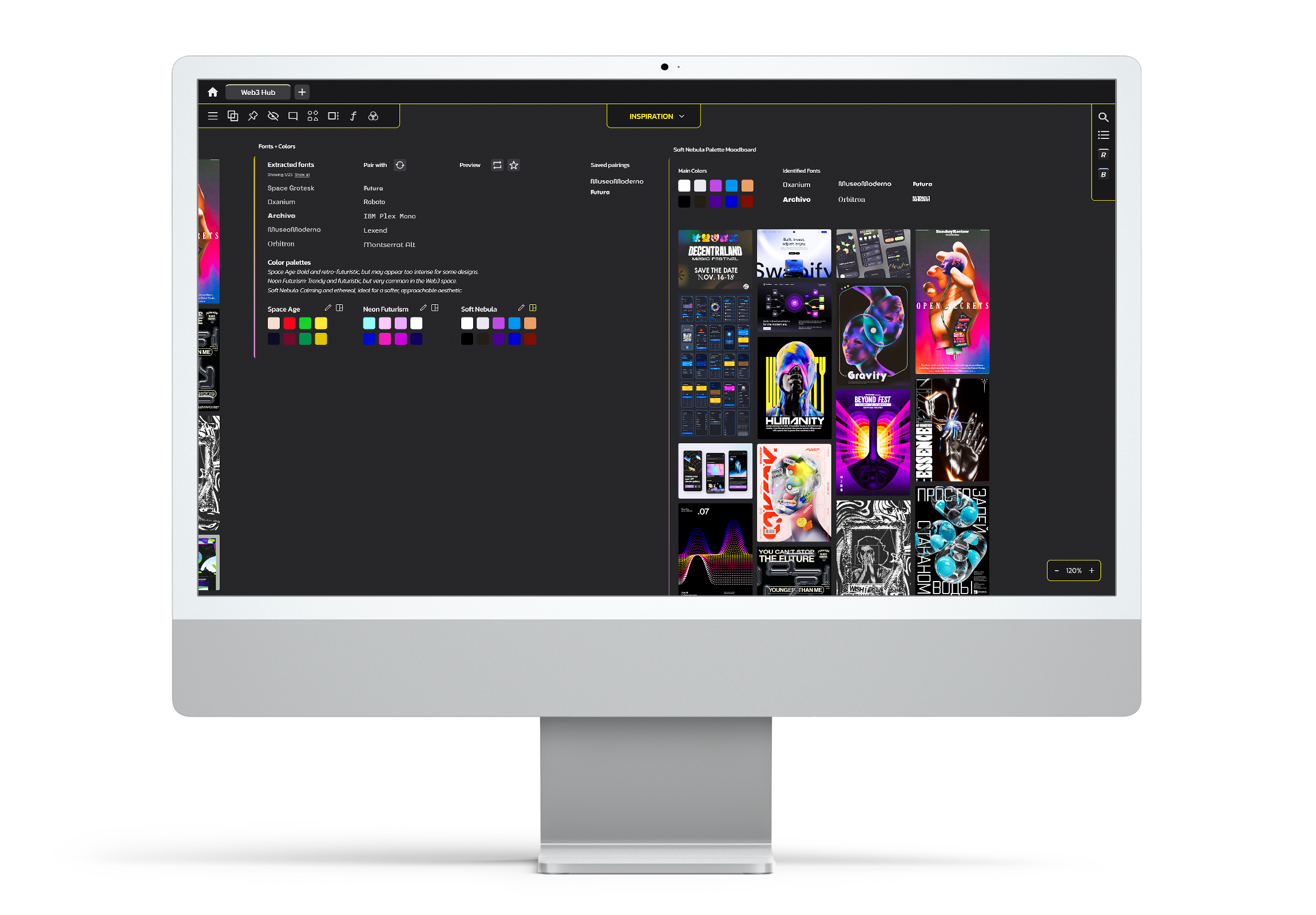
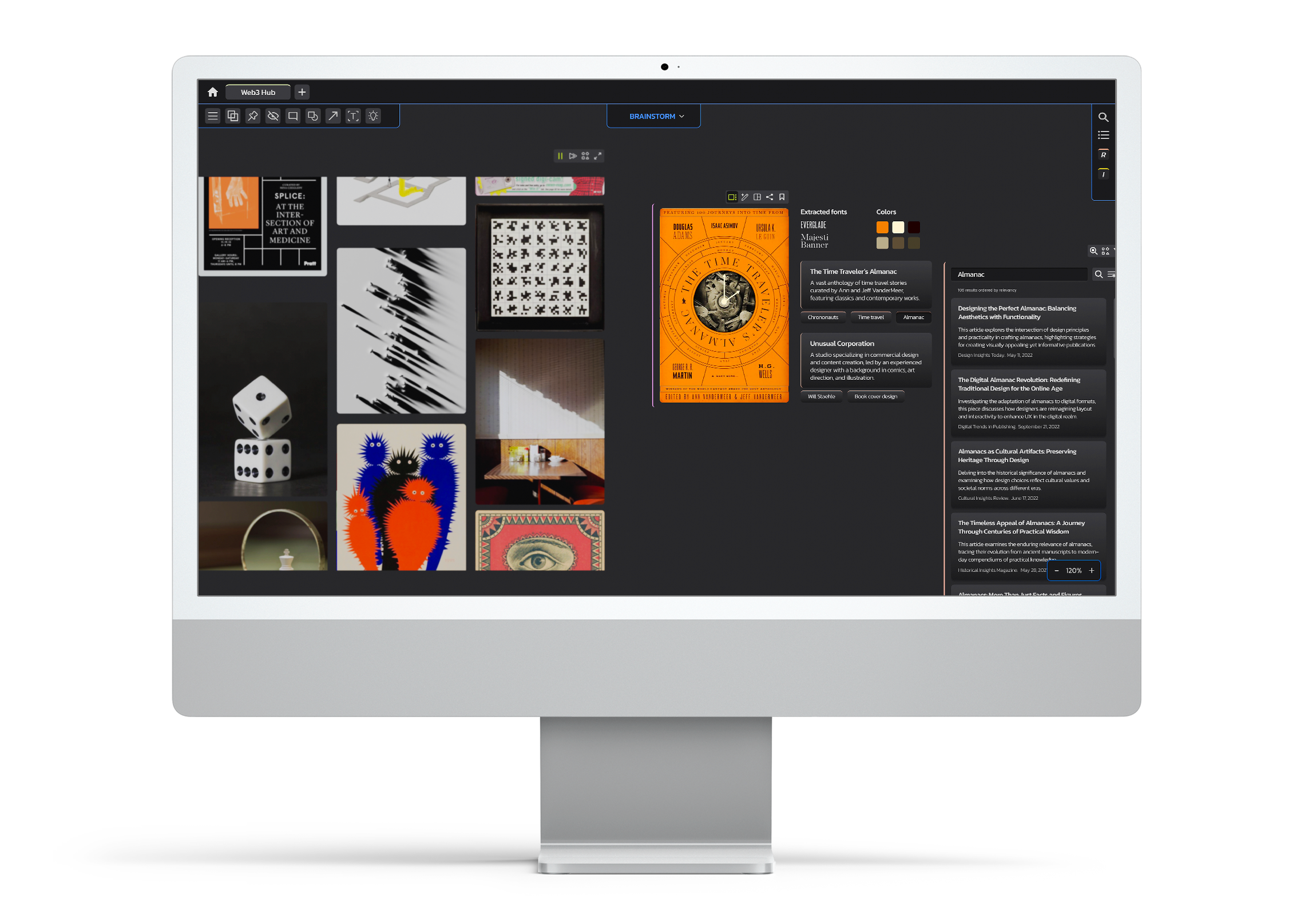
Study 2 explores how various modes of collaboration can impact creative output and support decision making in the concept development stage.Key features:
- Information fluidity across workspaces
- Real time keyword detection in speech
- Semantic label enabled search
- Assisted image editing
- Independent background work and suggestions
- Font extraction and pairing
- Moodboard and color palette generation
Study 3: Creative Block
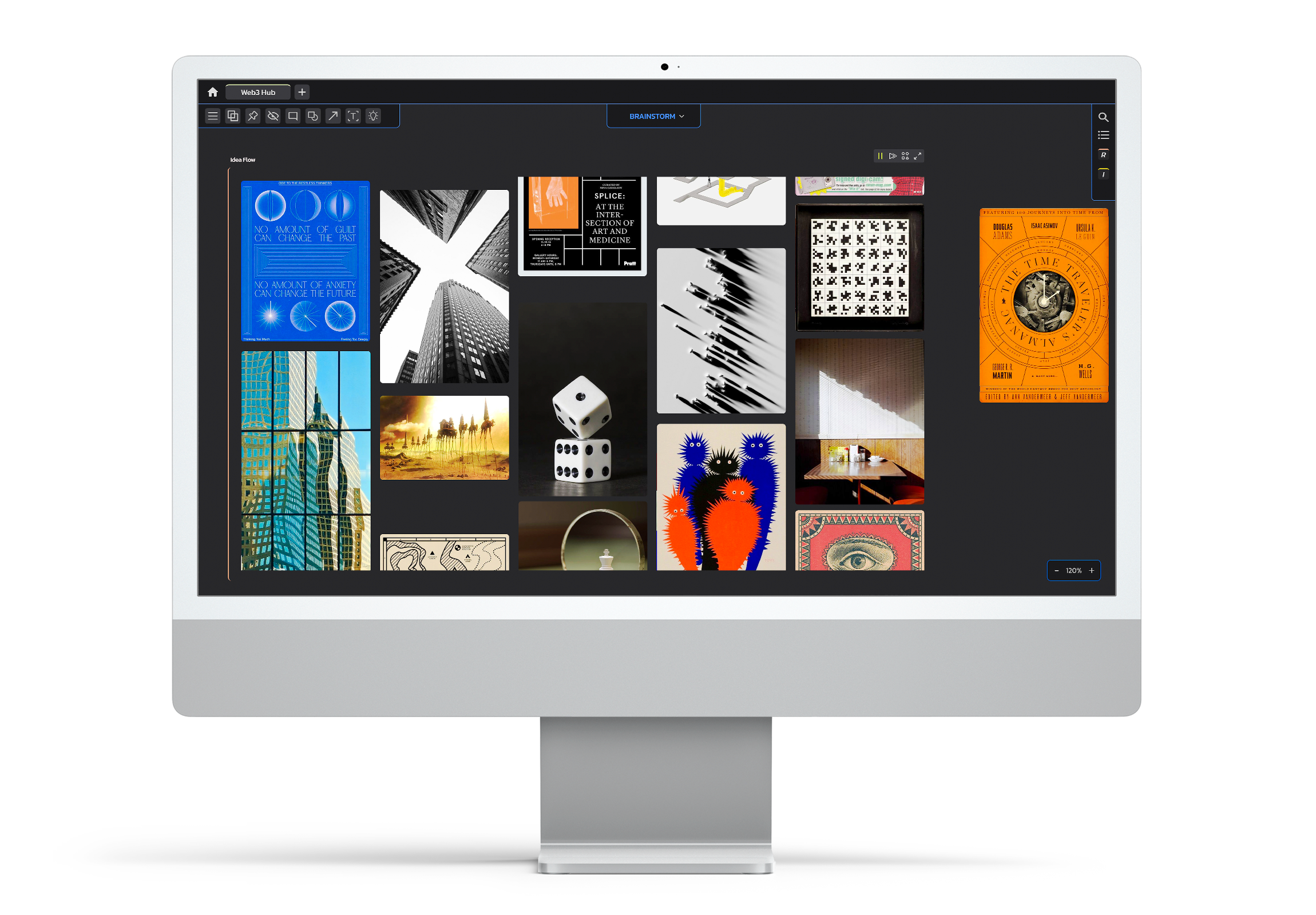
Study 3 focuses on ways to expose the user to serendipitous information to stimulate divergent thinking and break the creative block.Key features:
- Creative block detection
- Ideation exercise
- Exploratory image analysis tools
- Seamless transition between workspaces
- Serendipity feature uncovers tangentially related content
Key Takeaways
- A single, customizable platform streamlines project preparation by reducing file management overhead and improving workflow efficiency.
- Intelligent analysis, filtering, and content tools help users quickly find, understand, and act on relevant information without overwhelm.
- Seamless workspace transitions and proactive background support keep users focused and moving forward with minimal disruption.
- Idea discovery features stimulate creativity, uncover new research directions, and help users overcome creative blocks.